Full Steam Ahead: GN #1355
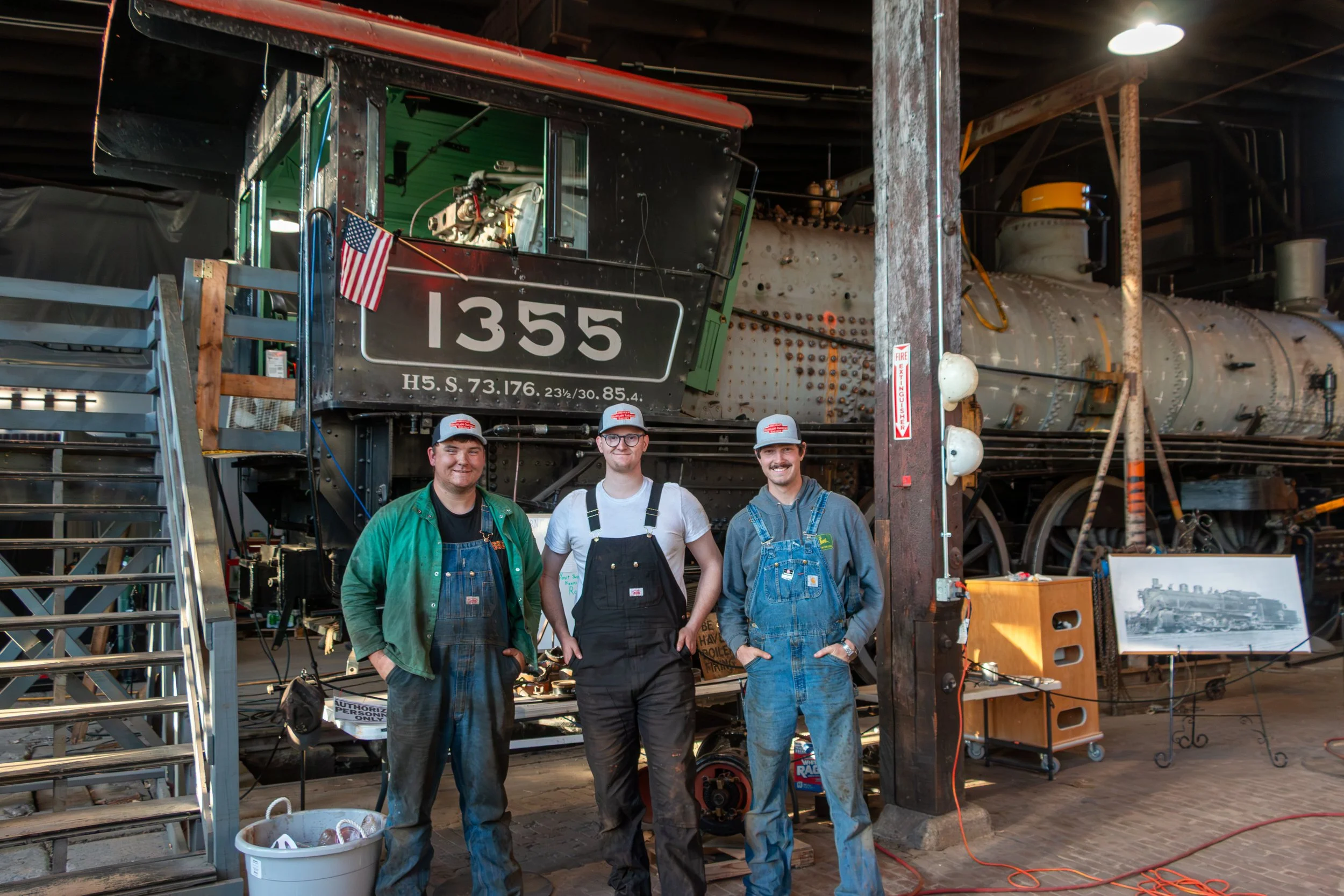
RDG steam services contractors (Left to Right) Grayson Littleton, Caden Adams, Kevin Palzynski stand proudly infront of Great Northern Locomotive #1355 in Sioux City, IA
Work is officially underway on the restoration of Great Northern steam locomotive #1355 at the Sioux City Railroad Museum in Iowa. After decades on display, the sole surviving GN H-5 class “Pacific” is being brought back from static preservation with the goal of returning her to operating condition—a milestone for Great Northern heritage and steam preservation alike.
Built in 1909 and rebuilt in 1924, #1355 has a long and storied history pulling passenger and freight trains across the upper Midwest. Retired in 1955 and placed on display in Sioux City soon after, she’s been cared for by dedicated volunteers for years. What makes this project especially exciting is that, after a July 2024 announcement, the locomotive entered a full operational restoration phase with support from the American Heartland Railroad Society and the Sioux City Railroad Museum.
Earlier this season, the team at RDG Steam Services was onsite to inspect #1355 as she began her FRA 1,472-day inspection—a comprehensive process required for any steam locomotive returning to service. With boiler tube removed and critical systems evaluated, RDG Steam Services’ inspection work helped set a clear path forward for the restoration.
Volunteers have since been making consistent progress: removing superheater tubes, preparing components for testing, and documenting what needs repair or replacement. This hands-on work brings the locomotive closer to the point where technicians can begin larger repairs and eventual reassembly. While there’s still a long road ahead, every step forward—from disassembling parts to detailed inspections—is a meaningful one.
Restoring #1355 isn’t just about metal and steam fittings; it’s about preserving a piece of railroading history. When she returns to operation, #1355 will once again connect people with the living legacy of steam—just as today’s restoration efforts are connecting a new generation with the skills, stories, and community that keep that legacy alive.
